Family disputes can be emotionally draining. Whether it’s about property, finances, relationships, or misunderstandings, such situations often affect not just individuals, but the entire family dynamic.
When conflicts escalate, many people assume that going to court is the only option. But in reality, there are alternative ways to approach these situations, especially if both sides are open to discussion.
So the question is:
Can ++family disputes++ be resolved without going to court in India?
Let’s understand this in a practical and realistic way.
Why People Want to Avoid Court in Family Matters
Going to court is a serious step. While it may be necessary in some situations, many families prefer to explore other options first.
Some common reasons include:
- Emotional stress and strain on relationships
- Long and uncertain timelines
- Public nature of legal proceedings
- Financial and mental burden
For many individuals, especially in the 30–50 age group, maintaining family balance and privacy becomes equally important.
Understanding Out-of-Court Resolution
Out-of-court resolution simply means trying to solve a dispute through discussion, negotiation, or mutual agreement, instead of taking the matter to court.
This approach focuses on:
- Communication
- Understanding both sides
- Finding a middle ground
It may not work in every situation, but it can be considered as a first step.
Common Ways Family Disputes Are Handled Without Court
There is no single method that works for everyone. However, some commonly used approaches include:
1. Mutual Discussion Within the Family
In many cases, disputes start due to misunderstandings or lack of communication.
A calm discussion can sometimes help:
- Clarify expectations
- Address misunderstandings
- Reduce emotional tension
Reality check:
This approach works best when both sides are willing to listen, not just argue.
2. Family Mediation
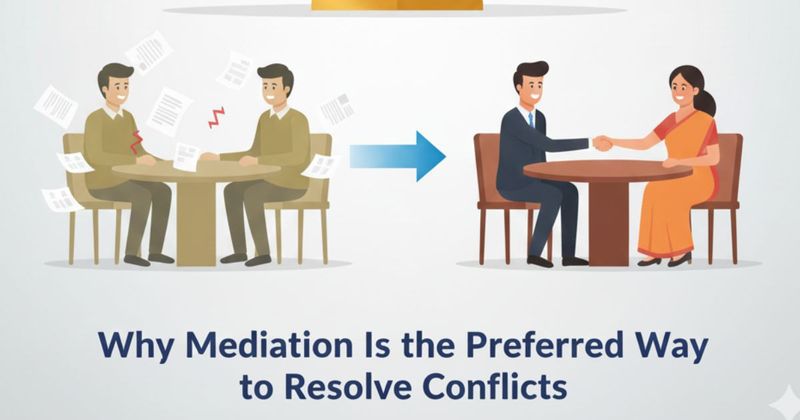
++Mediation++ involves a neutral third person who helps both sides communicate more effectively.
The role of a mediator is not to decide who is right or wrong, but to:
- Facilitate conversation
- Help both sides express their concerns
- Guide toward a possible solution
Why mediation can help
Sometimes, people are unable to communicate directly due to emotions. A neutral presence can:
- Keep the conversation balanced
- Reduce conflict
- Bring clarity
3. Involvement of a Trusted Third Person
In Indian families, it is common to involve:
- A senior family member
- A mutual relative
- A respected community member
This person may help:
- Calm down the situation
- Offer perspective
- Encourage compromise
However, it depends on trust and neutrality.
4. Professional Guidance
In some situations, people seek guidance from professionals who deal with dispute resolution.
This may include:
- Legal advisors (for understanding options)
- Settlement consultants
- Counsellors (for emotional aspects)
Important note:
The role here is usually guidance and support, not forcing a decision.
When Out-of-Court Resolution May Be Considered
This approach may be explored when:
- Both parties are open to discussion
- There is no immediate threat or serious risk
- The goal is to resolve the issue peacefully
However, every situation is different, and not all disputes follow the same path.
Situations Where the Court May Still Be Needed
While out-of-court methods can be helpful, there are cases where legal action may be required.
For example:
- When one party is not willing to cooperate
- When there are serious legal or safety concerns
- When agreements are not being respected
In such cases, legal intervention may become necessary.
Benefits of Trying to Resolve Disputes Without Court
While outcomes can vary, some possible advantages include:
1. Better Communication
It encourages open discussion rather than confrontation
2. More Privacy
Family matters remain within a limited circle
3. Flexible Solutions
Agreements can be tailored to both parties
4. Less Emotional Stress
The process may feel less aggressive compared to court proceedings
Common Misconceptions
“If it’s not in court, it’s not valid”
Some agreements can still be documented properly with guidance.
“Only lawyers can solve disputes”
In many cases, communication and mediation play a key role.
“Out-of-court always works”
Not necessarily, success depends on cooperation from both sides.
Practical Tips for Handling Family Disputes
Stay Calm and Avoid Immediate Reactions
Emotions can escalate conflicts quickly
Listen Before Responding
Understanding the other side can change the conversation
Avoid Public Arguments
Keeping matters private helps maintain dignity
Seek Guidance When Needed
If things feel stuck, external support can help
Final Thoughts
Family disputes are never easy, but going to court is not always the first or only option.
In many situations, discussion, mediation, and mutual understanding can help create a path toward resolution.
However, it is important to stay realistic:
- Every case is different
- Not all situations can be resolved the same way
- Decisions should be made carefully
Taking the right approach at the right time can make a significant difference, not just legally, but emotionally as well.