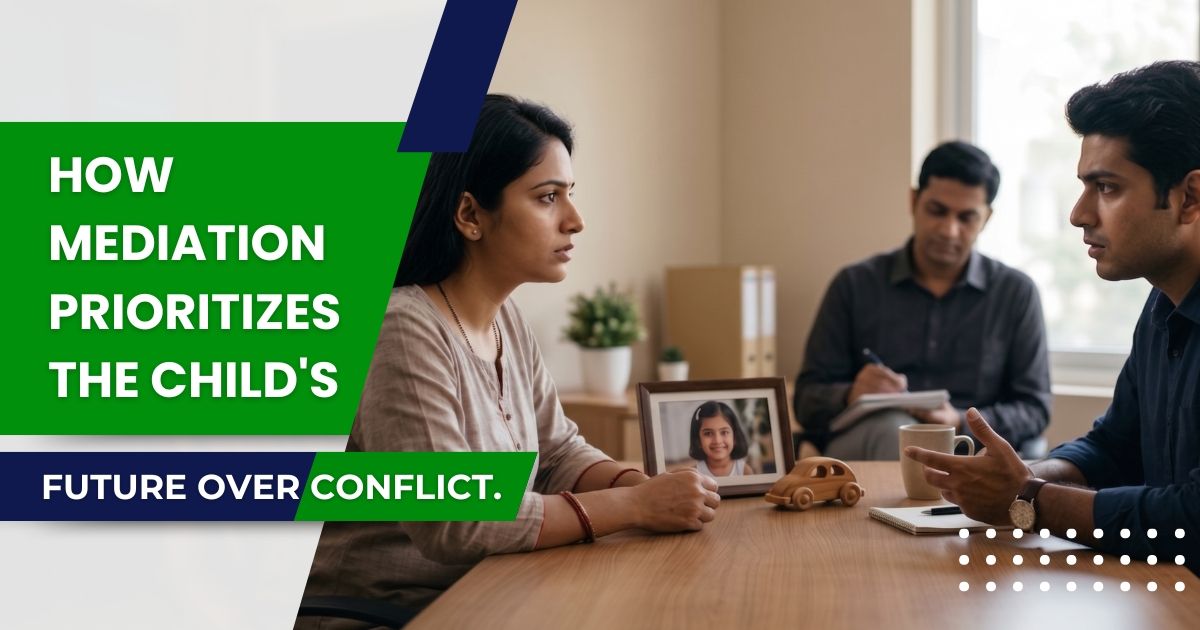
Family disputes, especially those involving separation or divorce, can be emotionally overwhelming. In such situations, it’s easy for conversations to turn into conflicts. But when children are involved, the focus often needs to shift from “who is right” to “what is best for the child.”
This is where mediation is often seen as a more balanced and thoughtful approach.
Instead of escalating disagreements, mediation encourages parents to work towards solutions that support their child’s emotional and practical well-being.
What is Mediation in Family Disputes?
++Mediation++ is generally understood as a process where a neutral third person helps both sides communicate and explore possible solutions.
Rather than making decisions for you, the mediator may:
- Help structure conversations
- Encourage mutual understanding
- Guide discussions toward workable outcomes
This approach is often less confrontational compared to traditional dispute methods.
Why the Child’s Future Matters Most
During conflicts, it’s natural for emotions to take over. However, children may experience these situations very differently.
They may need:
- Stability in daily life
- Emotional reassurance
- Continued connection with both parents (where possible)
Mediation often creates space where these needs can be discussed calmly, rather than getting lost in arguments.
How Mediation Shifts the Focus
One of the key differences with mediation is the shift in mindset.
Instead of focusing on:
- Past disagreements
- Blame or accusations
It gently moves the discussion towards:
- Future arrangements
- Co-parenting understanding
- Practical routines for the child
This shift can sometimes reduce tension and open up more constructive conversations.
Creating a More Stable Environment for the Child
Through mediation, parents may be able to:
- Discuss schooling and daily routines
- Plan living arrangements
- Agree on communication patterns
While every situation is different, the idea is to create some level of clarity that helps the child feel more secure.
Emotional Benefits of Mediation
Children are often sensitive to conflict, even when it is not directly expressed in front of them.
Reducing visible tension between parents may:
- Help lower emotional stress for the child
- Support better adjustment to changes
- Create a more peaceful environment
At the same time, parents may also feel less overwhelmed when discussions are guided calmly.
What Happens When Conflicts Turn Financial?
Family disputes can sometimes lead to financial challenges as well.
For example:
- Managing separate households
- Handling ongoing loan obligations
- Dealing with unexpected expenses
In such situations, financial stress can add another layer of pressure to an already difficult phase.
Where Financial Support May Play a Role
If financial pressure builds up during or after a ++family dispute++, some individuals explore support options such as:
- Loan settlement assistance
- Credit card payment restructuring
- Debt management guidance
- Help in handling recovery-related stress
While these services are separate from mediation, they may help individuals regain some financial balance during challenging times.
Is Mediation Always the Right Choice?
Mediation is not a one-size-fits-all solution.
In some situations, it may work well. In others, different approaches might be required.
The effectiveness of mediation can depend on:
- Willingness of both parties to communicate
- Nature of the conflict
- Individual circumstances
Final Thoughts
When children are involved, resolving conflicts is not just about reaching an agreement; it’s about shaping a future environment for them.
Mediation offers a space where:
- Conversations may feel less confrontational
- The child’s needs can stay central
- Practical solutions can be explored
And if financial stress becomes part of the journey, seeking the right kind of support at the right time may help ease some of that burden.